
 English
 Español
 Portugues
 Pусский
 Français
 Deutsch
 日本語
日本語 한국어
한국어 العربية
 Italiano
 Nederlands
 Polski
 ไทย
ไทย Türk dili
 हिन्दी
 Indonesia
 Melayu
 Tiếng Việt
 Română
Low temperature solenoid valve
A low temperature solenoid valve is an electrically operated valve designed to control the flow of fluids in systems that work under extremely cold conditions. It is widely used in refrigeration, cryogenic applications, cold storage equipment, liquefied gas systems, and other industrial processes where reliable flow control is required at low temperatures. Because it must operate in environments where ordinary valves may fail, a low temperature solenoid valve is specially engineered to maintain stability, sealing performance, and fast response even when exposed to severe cold.The basic working principle is simple. When an electric current passes through the solenoid coil, a magnetic field is created. This magnetic force moves the plunger or piston inside the valve, opening or closing the fluid passage. When the current stops, the magnetic field disappears, and the valve returns to its original position, usually by spring force or fluid pressure. This automatic operation allows precise and efficient control without manual intervention.Low temperature solenoid valves are made with materials that can withstand thermal contraction and prevent brittleness at low temperatures. The valve body is often manufactured from stainless steel, brass, or other corrosion-resistant metals. Sealing components are selected carefully to ensure flexibility and durability in cold environments. Special attention is given to the internal design so that ice formation, leakage, and sticking are minimized. In many cases, the coil is also designed with insulation and protection features to maintain electrical reliability.These valves are available in different types, including normally open and normally closed configurations. Normally closed valves remain shut when not energized, which is common in safety-critical systems. Normally open valves remain open without power and close when energized, which may be useful in specific control applications. Depending on system requirements, low temperature solenoid valves can be designed for direct acting or pilot-operated operation, allowing them to handle different pressure ranges and flow capacities.One of the main advantages of a low temperature solenoid valve is its quick and accurate response. It can open and close rapidly, making it suitable for automated control systems. It also reduces the need for manual operation, improves energy efficiency, and enhances safety in industrial processes. Because it is compact and easy to install, it can be integrated into many types of equipment without taking up much space.In practical use, these valves must be carefully matched to the working temperature, pressure, and fluid type. Proper selection and installation are essential to ensure long service life and dependable performance. Regular inspection and maintenance also help prevent problems such as seal wear, coil failure, or blockage caused by frost or contaminants.In summary, a low temperature solenoid valve is a critical component for fluid control in cold environments. Its special materials, reliable structure, and automatic operation make it an essential choice for refrigeration and cryogenic systems.
produkt
Klasifikace:
-
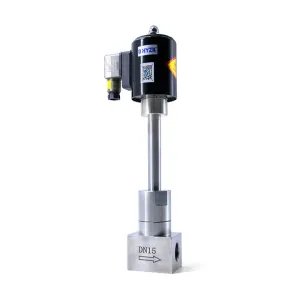
Cryogenic solenoid valve
kategorie: Solenoid ValvePohledy: 575sériové číslo:čas vydání: 2026-10-23 17:13:59Nominal Diameter: DN6~25
Applicable Media: Liquid nitrogen, liquid oxygen, liquid hydrogen, liquefied natural gas, and other cryogenic media
Applicable Pressure: 0~1.6MPa, 0~2.5MPa, 0~4.0MPa, 0~4.0MPa
zprávy
Klasifikace:
Zatím žádné výsledky vyhledávání!
pouzdro
Klasifikace:
Zatím žádné výsledky vyhledávání!
video
Klasifikace:
Zatím žádné výsledky vyhledávání!
stažení
Klasifikace:
Zatím žádné výsledky vyhledávání!
nábor
Klasifikace:
Zatím žádné výsledky vyhledávání!
Doporučené produkty
Zatím žádné výsledky vyhledávání!



 Whatsapp
 Telefon